


Quick answer: DISC is a simple behavior model that sorts how people tend to act and communicate into four styles: Dominance, Influence, Steadiness and Conscientiousness. Using DISC for home service business owners means applying those styles in four places: who you hire for which role, how you manage each person, how your team talks to each other, and how you talk to clients when you sell.
Most residential cleaning companies run on people more than equipment. Your techs, your office manager and your clients all bring their own way of handling pressure, change and detail. When you can read those differences, a lot of daily friction gets easier to manage. This guide covers DISC for home service business owners from the ground up, so you can use it on purpose instead of by accident.
Why behavior styles matter in a cleaning company
A cleaning business has more handoffs than most owners realize. A lead calls the office, someone quotes the job, a scheduler builds the route, a tech arrives at the home, and someone follows up when something goes wrong. Every handoff is a conversation, and every conversation is shaped by the styles of the people in it.
When styles clash and nobody names it, owners tend to label it as attitude, laziness or a bad fit. Often it is simply two people who prefer different pace, detail and directness. DISC gives you a shared, neutral language for those differences. It does not label anyone good or bad, and it does not predict job performance on its own. It helps people understand each other faster.
The four DISC styles, in cleaning business terms
1. Dominance (D)
Direct, fast and results focused. A high D owner or manager wants the bottom line first. On a team, a D style may push hard on speed and get impatient with long explanations. They respond well to clear goals and real authority.
2. Influence (I)
Social, optimistic and persuasive. An I style often shines on the phone, in sales conversations and in team culture. They can lose track of details and follow up. They respond well to recognition and a little energy in the conversation.
3. Steadiness (S)
Patient, loyal and consistent. Many of the most dependable field techs lean S. They like a predictable routine and a stable team, and they may not speak up when something is wrong. They respond well to advance notice of change and a calm, personal approach.
4. Conscientiousness (C)
Careful, accurate and quality minded. A C style is often your best checklist keeper, quality inspector or bookkeeper. They want to understand the reasons behind a decision and dislike vague instructions. They respond well to clear standards and written detail.
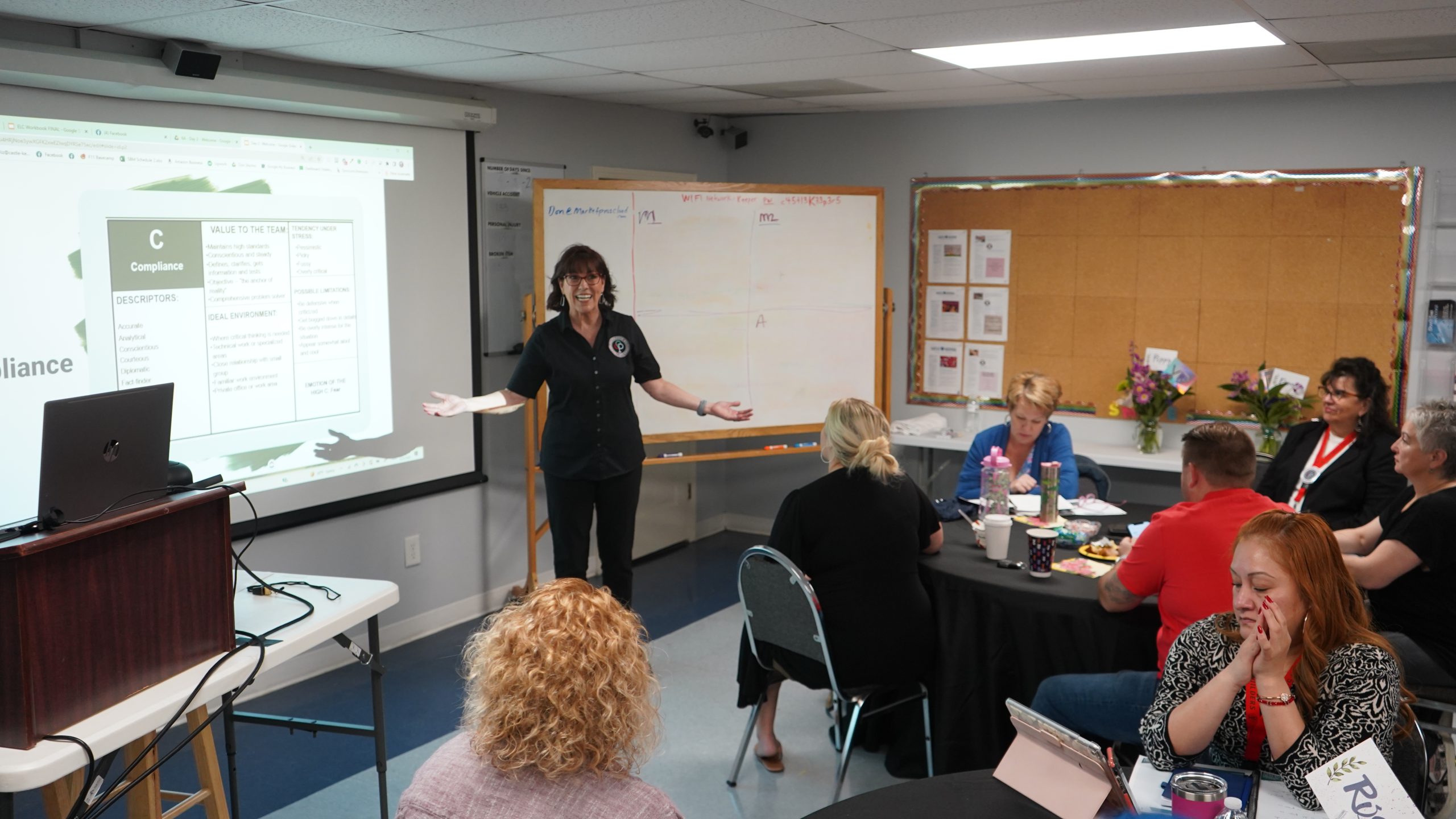
Nobody is only one style. Style tools describe tendencies, not fixed traits. For broader guidance on using assessments at work, SHRM is a useful resource. Most people have a primary style and a secondary one, and they flex depending on the situation.
Four places to use DISC for home service business growth
Think of DISC as a lens you bring to four parts of the business. Each one deserves its own deeper look, but here is the overview of DISC for home service business owners.
- Hiring and onboarding. Some roles naturally suit certain styles. Detailed quality checks often fit a C, steady recurring routes often fit an S, phone sales often fit an I. Use DISC to understand a candidate and plan their onboarding, never as the only reason to hire or reject someone.
- Managing and developing people. The same feedback lands differently on each style. A D wants it short and direct. An S wants it private and kind. Managers who adjust their approach get fewer surprises and less turnover.
- Team communication. Field and office often have different styles and different pressures. Naming the styles changes personal frustration into a solvable communication problem.
- Sales and client care. Clients have styles too. A D client wants the price and the timeline. A C client wants to know exactly what is included. Matching your estimate conversation to the client builds trust faster.
How to introduce DISC to your team
- Start with yourself. Take an assessment first so you understand your own blind spots as a leader.
- Frame it as a communication tool. Tell the team it is about working together better, not about grading anyone.
- Share styles openly. When people know each other’s style, they stop taking differences personally.
- Use it in real moments. Refer to styles in one-on-ones, team huddles and when planning a hard conversation.
CPB offers DISC assessments for owners and teams. Ask CPB about DISC if you want a starting point.

Common mistakes
- Using DISC as a hiring test. A style is not a skill. Reliability, values and experience still matter most.
- Putting people in a box. Saying someone is “just a D” excuses behavior instead of improving it.
- Treating one style as best. A healthy cleaning company needs all four styles in the right seats.
- Learning it once and forgetting it. DISC only helps when it shows up in weekly conversations.
Your first 30 days
- Week 1: Take a DISC assessment yourself and note how your style shows up when you are under pressure.
- Week 2: Invite your office team and key field leads to take one, and share results in a short team meeting.
- Week 3: Pick one recurring friction point, such as schedule changes, and talk through how each style experiences it.
- Week 4: Adjust one process, like how you announce changes or give feedback, based on what you learned.
Where DISC fits in the Align Operating System
In the Align Operating System, DISC supports the People pillar and the Leadership thread that runs through every level. It also touches Sales and Execution, because how people communicate shapes how well commitments get kept. In Mastery Circle, owners convert insights like these into weekly commitments tracked in GET. If your managers need support leading different styles, Manager Circles help supervisors and office managers build those skills.
Key takeaways
- DISC describes four styles: Dominance, Influence, Steadiness and Conscientiousness.
- Using DISC for home service business teams works best in hiring, managing, communication and sales.
- DISC is a communication tool, not a hiring test or a label.
- It creates value only when it shows up in real, weekly conversations.
Next step: take your own DISC assessment, then take the free AOS Diagnostic to see how your People and Leadership pillars score today.
Watch & put it to work
Practice communication and understanding
Use these short lessons to start a conversation about communication preferences and listening on your team. Free archive lessons from Liz Trotter.
Understanding Communication Styles With DISC
A short introduction to understanding communication styles through DISC.
Tips for Improving Listening Skills
A short lesson focused on improving the way you listen.
View all LIZ A.R.D.S. · Archive recordings may mention past events or offers.
Frequently asked questions
What does DISC stand for?
DISC stands for Dominance, Influence, Steadiness and Conscientiousness, the four behavior styles the model describes.
Is DISC useful for a small cleaning company?
Yes. Even a team of a few techs and one office person has different styles, and naming them makes feedback, scheduling changes and client conversations smoother.
Can I use DISC to decide who to hire?
Use it to understand a candidate and plan onboarding, not as the deciding factor. Reliability, values, skills and references should carry the hiring decision.
How often should we talk about DISC as a team?
Bring it into regular conversations such as one-on-ones and team huddles. A short refresher each quarter keeps the language alive without making it a big project.
Develop the people leading your team
Learn Circle supports supervisors and managers with people and daily operations, Build Circle adds KPI management, and Leadership Circle develops senior leaders.
Not sure where to focus? Take the optional AOS Diagnostic.

Founder of Core Profit Builders and creator of the Align Operating System (AOS). Part owner in six cleaning companies. Certified High-Performance Coach (CHPC) and co-host of the Smart Business Moves podcast.
More about Liz