


Quick answer: A skills development plan for a cleaning company lists the skills each role requires, shows every employee where they stand today, and sets a clear path with practice, sign-offs and coaching to reach the next role. Done well, skills development turns good technicians into senior technicians, field trainers and team leads, which strengthens quality, retention and the owner’s freedom.
Most cleaning companies have talented people who never reach their potential. Not because they lack ability, but because nobody showed them what the next step looks like or how to get there. A technician who could become an excellent team lead keeps cleaning the same homes until she leaves for a company that offers a path. A structured approach to skills development fixes that. This guide walks through six practical steps to build a plan for technicians and team leads, plus the mistakes that quietly stall progress.
Why skills development matters in a cleaning company
In residential cleaning, your service is delivered by people working inside clients’ homes, usually without the owner present. The quality clients experience depends almost entirely on what those people know and how consistently they apply it. That makes skills development one of the most direct levers an owner has over quality, client retention and profit.
It matters for retention too. People tend to stay where they feel they are growing. When a technician can see that learning deep-clean kitchens, then quality inspections, then field coaching leads to more responsibility and recognition, the job becomes a career instead of a stopgap. Our guide on how to reduce turnover in a cleaning company explores that connection in depth.
Finally, skills development is how owners escape the trainer seat. As long as the owner is the only person who can teach, inspect and solve problems, growth is capped. Building skill in others is the practical path out of being the bottleneck.
Step 1: Define the roles and the skills each one requires
You cannot develop people toward a target you have not described. Start by listing the roles in your company, such as technician, senior technician, field trainer, team lead and office roles. For each one, write the skills the role requires. Keep the language concrete: “cleans a bathroom to standard within budgeted time” is useful, “is a good cleaner” is not.
Group skills into a few categories so the list stays manageable:
- Technical skills: kitchens, bathrooms, dusting, floors, deep cleans, move-outs, product and equipment use.
- Quality and safety: following the checklist, self-inspection, chemical safety, protecting client property.
- Client skills: greeting clients, handling requests, reporting problems, using TIDY with an upset client.
- Leadership skills: teaching, inspecting others’ work, coaching conversations, running a huddle.
Your written cleaning SOPs are the foundation here. Every technical skill should point to a documented standard, so skills development has a clear definition of “done right.”
Step 2: Build a simple skill matrix
A skill matrix is a grid with employees down one side and skills across the top. Each cell shows where that person stands: not started, learning, signed off, or able to teach. It can live in a spreadsheet. What matters is that it is visible and current.
The matrix does three jobs at once. It shows each employee exactly what to work on next. It shows leaders where the team is thin, such as only one person who can handle move-out cleans. And it makes scheduling smarter, because you can match jobs to signed-off skills instead of guessing. For many owners, the skill matrix is the single most useful skills development tool they build.
Four levels for every skill
- Not started: the person has not been trained on this skill yet.
- Learning: trained and practicing, still under supervision.
- Signed off: consistently meets the standard without supervision.
- Can teach: able to train and coach others on this skill.
Step 3: Use sign-offs, not seat time
A common mistake is treating time on the job as proof of skill. Six months of cleaning does not mean someone cleans bathrooms to standard. Skills development works best when progress is based on demonstrated ability: a team lead or trainer observes the work, checks it against the standard, and signs it off.
Set a clear sign-off rule for each skill, such as passing three consecutive quality inspections within budgeted time. Clear rules make sign-offs fair and consistent across teams. They also give employees a concrete goal. “Pass three bathroom inspections this month” is far more motivating than “keep getting better.”

Step 4: Map a visible career path
Connect the skill matrix to roles so employees can see where skills development leads. A simple path might be technician, senior technician, field trainer, team lead, and later a role in scheduling, quality control or the office. For each step, list the skills that must be signed off and what changes in responsibility or pay.
Write it down and share it. When the path is visible, ambitious people know exactly what to work on. When it is invisible, they assume the only way up is out. Some owners post the path in the office; others review it in every one-on-one. Either way, consistency matters more than format.
Be careful with promotions. Moving your best cleaner into a team lead role without preparing her for leadership often creates a struggling leader and loses a great technician. Leadership is its own set of skills, and it deserves the same deliberate skills development as kitchens and bathrooms.
Step 5: Coach progress with FTD
Skill grows through practice and feedback. Short, regular coaching conversations keep skills development moving between sign-offs. Liz Trotter, a Certified High Performance Coach with extensive DISC training, teaches owners a simple structure called FTD: Feel, Think, Do.
- Feel: ask how the employee feels about their progress on a skill.
- Think: ask what they think is helping or getting in the way.
- Do: agree on what they will do before the next check‑in.
FTD keeps the employee in charge of the next step, which builds confidence and ownership. DISC awareness helps too: a direct, results-focused technician may want a clear target and quick feedback, while a steady, detail-oriented one may want time to practice before being observed. Adjusting how you coach is part of effective skills development. Our article on building a culture of continuous learning shows how coaching fits into the daily rhythm.

Recognition keeps the momentum going. When someone earns a sign-off, say so in the morning huddle, update the matrix where the team can see it, and mention it in the next one-on-one. Small, public acknowledgments tell everyone that growth is noticed and valued. Over a few months, the team starts asking what they can learn next instead of waiting to be told, and that shift is when the plan begins to run on its own energy rather than the owner’s.
Step 6: Track skills development on the scorecard
What gets measured gets attention. Add one or two skills development measures to your weekly scorecard, such as skills signed off this week or the number of people on track to reach the next role this quarter. Review them in your weekly leadership meeting alongside quality and labor numbers.
Tracking makes skills development a real priority instead of something that happens when the schedule is slow. It also lets you connect skill growth to results. When the re-clean rate drops on teams with more signed-off skills, you have evidence that the investment is paying off. Our guide to measuring the ROI of employee development explains which metrics to compare.
A sample skills development path for a team lead
Here is a simplified, hypothetical example of how one path might look. Your details will differ, but the structure is easy to adapt.
- Senior technician: signed off on every room type, deep cleans and move-outs, with consistent inspection scores.
- Field trainer: able to teach core skills to new hires, run a ride-along and complete a training checklist.
- Team lead candidate: runs quality inspections, leads a morning huddle lesson and holds FTD conversations with support.
- Team lead: owns a team’s quality and schedule numbers, coaches every team member and reports on the scorecard each week.
Each step builds on the one before it, and each has clear sign-offs. That structure is what makes skills development fair, visible and repeatable as the company grows.
Common skills development mistakes
- Training once and stopping: onboarding ends and development disappears until the next complaint.
- No written standard: without SOPs, sign-offs become opinions.
- Promoting without preparation: great cleaners become struggling leaders.
- Owner as the only trainer: every skill runs through one person, which caps growth. Our guide on how to stop being the bottleneck addresses this directly.
- No recognition: people stop investing effort when progress goes unnoticed.
Each of these has the same fix: written standards, clear sign-offs, a visible path and a weekly rhythm that keeps development on the agenda.
Where skills development fits in AOS
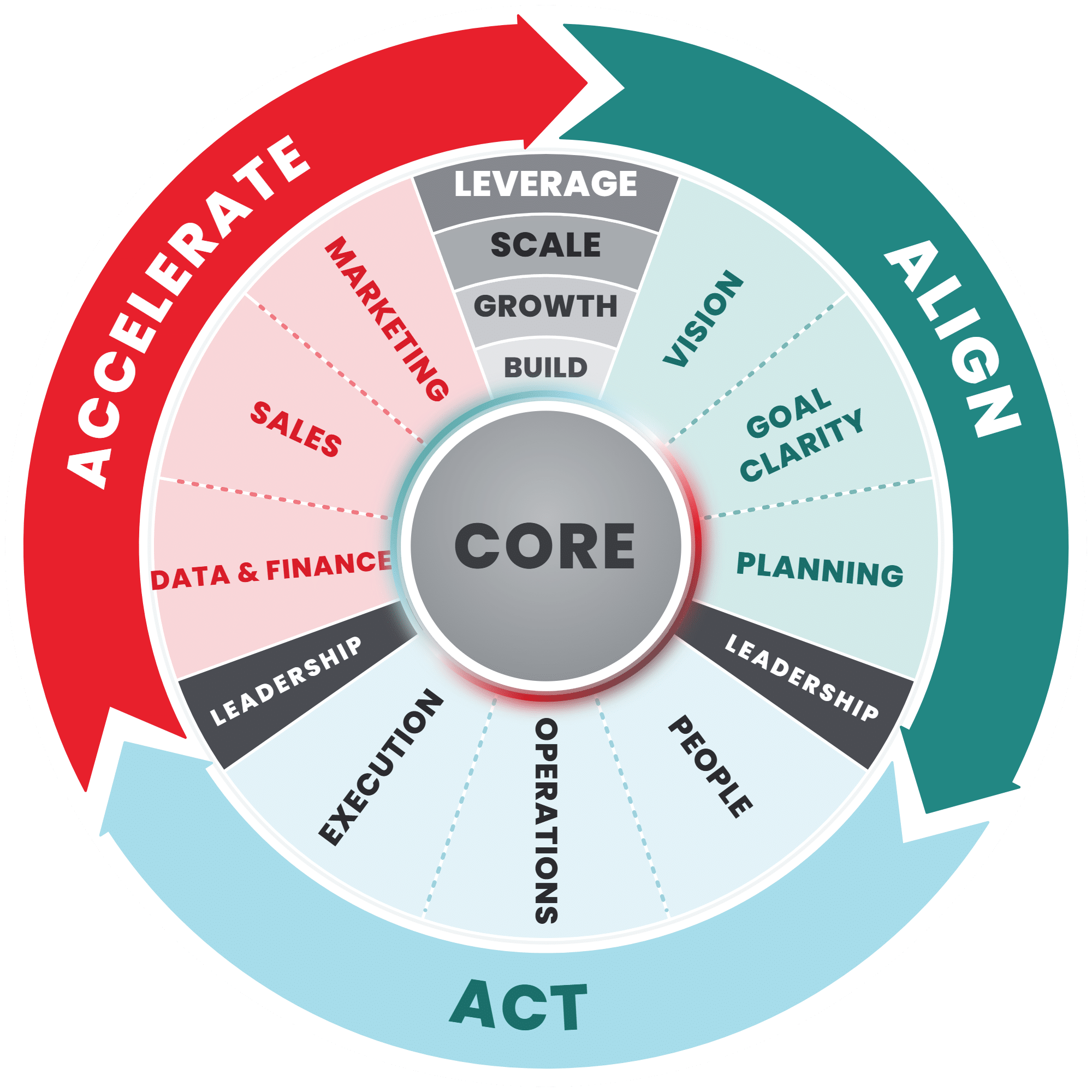
In the Align Operating System (AOS), created by Core Profit Builders for residential cleaning companies, skills development lives mainly in the People pillar of the Act phase. It connects to Operations through SOPs and to Data & Finance through the scorecard, and Leadership runs through every pillar. For the bigger picture of aligning development with company goals, read about building a development-focused organization, and for current approaches, see employee development trends.
The free AOS Diagnostic shows your People pillar score alongside the other eight. Use your scores to identify gaps, then choose priorities based on your goals and what needs to happen first. For outside reading on job design and training, the Society for Human Resource Management publishes helpful resources, and the BLS profile of maids and housekeeping cleaners offers context on the roles you are developing.
Your first 30 days
- Week 1: List your roles and write the skills each one requires, linking technical skills to your written SOPs.
- Week 2: Build a skill matrix for every employee and mark where each person stands today.
- Week 3: Set sign-off rules for each skill, draw a simple career path, and share both with your team.
- Week 4: Hold one FTD coaching conversation with every team lead and add a skills development measure to your weekly scorecard.
Key takeaways
- Skills development turns good technicians into senior technicians, trainers and team leads.
- A skill matrix shows each person what to work on and shows leaders where the team is thin.
- Base progress on sign-offs against written standards, not time on the job.
- A visible career path gives ambitious people a reason to grow with you.
- Track skills development weekly so it survives busy seasons.
Next step: Take the free AOS Diagnostic to see your People pillar score, then contact our team to talk about building your team’s path.
Frequently asked questions
What is a skills development plan for a cleaning company?
It is a written plan that lists the skills each role requires, shows where every employee stands today, and sets a path with practice, sign-offs and coaching to reach the next role. It makes skills development fair, visible and repeatable.
What is a skill matrix?
A skill matrix is a grid with employees on one side and skills on the other. Each cell shows whether the person has not started, is learning, is signed off, or can teach that skill. It guides training, scheduling and promotions.
How do I prepare a technician to become a team lead?
Treat leadership as its own set of skills. Have the candidate train new hires, run inspections and lead huddle lessons with support, coach them with regular FTD conversations, and promote only after those leadership skills are signed off.
How often should we review skills development?
Track one or two skills development measures weekly on the scorecard, hold short coaching conversations every week or two, and review each person’s path and the career ladder at least once a quarter.
Does skills development help with retention?
It often does. People tend to stay where they see a future. Clear skills, fair sign-offs, recognition and a visible career path give good cleaners a reason to grow with your company instead of leaving.
Develop the people leading your team
Learn Circle supports supervisors and managers with people and daily operations, Build Circle adds KPI management, and Leadership Circle develops senior leaders.
Not sure where to focus? Take the optional AOS Diagnostic.

Founder of Core Profit Builders and creator of the Align Operating System (AOS). Part owner in six cleaning companies. Certified High-Performance Coach (CHPC) and co-host of the Smart Business Moves podcast.
More about Liz