

Quick answer: Most residential cleaning companies leak profit in six places: pricing set by feel, rework and credits, employee turnover, unproductive drive time and scheduling gaps, client churn, and owner time spent on low-value work. Each leak has a system that plugs it, and fixing even two of them can change the profit picture of a cleaning business. Each one quietly lowers cleaning business profit until a system is in place.
When owners come to Core Profit Builders, the first conversation is rarely about revenue. It is about why a busy year did not feel like a profitable one. The work was there, the team was working, and yet the bank balance did not reflect the effort. That gap almost always comes from leaks: small, repeated losses that no one is measuring.

Leak 1: Pricing set by feel
Many cleaning companies set prices by looking at competitors or by what feels fair, then keep those prices for years while wages, supplies and fuel rise. The fix is pricing built from real costs: labor hours per job type, the true cost of an hour of labor including taxes and benefits, supplies and overhead, plus the margin you need. Review prices at least once a year and whenever costs move.
Leak 2: Rework and credits
Every re-clean costs a full visit of labor with zero new revenue. Every credit comes straight out of profit. The cause is usually unclear standards: the team does not share one definition of “done.” The fix is written standards with photos, a simple quality check, and a weekly review of re-clean reasons so patterns get fixed at the source.
Leak 3: Turnover
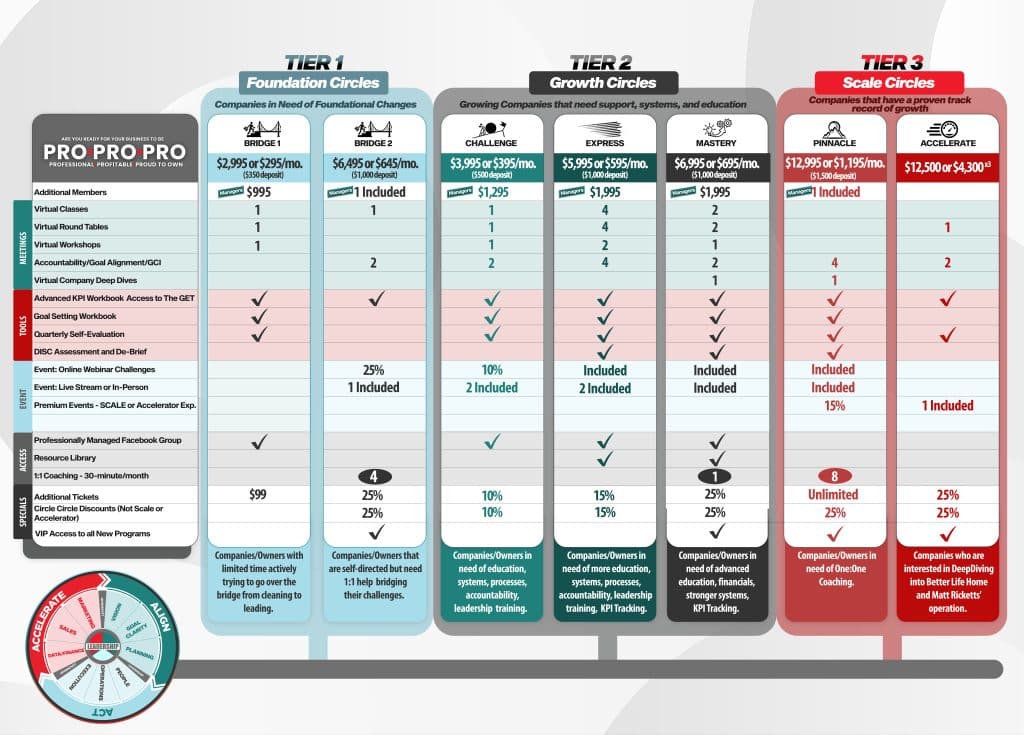
Each departure brings recruiting time, training hours, slower new-hire jobs and sometimes lost clients who liked their regular cleaner. The systems that reduce turnover are a repeatable hiring process, structured onboarding, clear roles and a leader who checks in regularly. These live in the People pillar of the Align Operating System.
Leak 4: Drive time and scheduling gaps
Unpaid gaps between jobs and long drives across your service area quietly eat labor hours. Route density, sensible service zones and a schedule built around them can recover hours every week without adding a single client.
Leak 5: Client churn
Winning a new recurring client costs far more than keeping an existing one. Churn is often a symptom of inconsistent quality, poor communication or no follow-up after problems. A client retention system, with check-ins, a clear complaint process and recognition of long-time clients, protects the revenue you have already earned.
Leak 6: Owner time on low‑value work
The most expensive hour in a cleaning company is the owner’s. When that hour goes to answering routine questions or covering shifts, nobody is working on pricing, hiring or growth. Delegation systems, written decision rules and a weekly meeting rhythm move routine work to the team and free the owner for the work only they can do.
How to find your biggest leak
You cannot fix what you do not measure. Start with a weekly scorecard that tracks a few numbers tied to these leaks: re-clean rate, labor percentage, client cancellations and staff turnover. Patterns appear within weeks. The AOS Diagnostic also points to the pillars where your leaks are most likely hiding.
Optimize what you have, build what you are missing
The core idea behind Core Profit Builders is simple: new profit usually comes from systems, not from more hours. Some systems already exist in your business and only need tightening. Others are missing entirely and need to be built. AOS gives you the map for both, and implementation support keeps the work moving week after week until the leaks are closed.
Your first 30 days
- Week 1: Pull last quarter’s numbers: revenue, labor cost, re-cleans, credits, cancellations and departures.
- Week 2: Calculate your true hourly labor cost and compare your current prices against it.
- Week 3: Start a weekly scorecard with re-clean rate, labor percentage, cancellations and turnover.
- Week 4: Pick the single biggest leak and make plugging it one of your Quarterly Drivers.
Measuring cleaning business profit every week
Cleaning business profit is easiest to protect when you see it weekly instead of at tax time. A simple scorecard with labor percentage, re-clean rate and cancellations shows which leak is growing before it costs you a month of margin.
The SBA guide to managing business finances recommends regular financial reviews for exactly this reason. Pair that habit with the systems above and cleaning business profit becomes something you manage on purpose.
Key takeaways
- Busy and profitable are not the same thing; leaks hide the difference.
- Underpricing, rework, turnover, drive time, churn and owner time are the six common leaks.
- Every leak has a system that plugs it.
- Measure weekly so leaks show up early, not at the end of the year.
Next step: pick the single biggest leak and make protecting cleaning business profit one of your Quarterly Drivers.

Frequently asked questions
What is the biggest profit leak in a cleaning business?
It varies by company, but underpricing and rework are the most common. Both are fixable with cost-based pricing and written quality standards.
How often should a cleaning company review its prices?
At least once a year, and any time labor, supply or fuel costs change meaningfully.
How do I know where my business is leaking profit?
Track a weekly scorecard with re-clean rate, labor percentage, cancellations and turnover, and take the AOS Diagnostic to see which pillars need work.
What is a healthy cleaning business profit margin?
A healthy cleaning business profit margin depends on your labor model, pricing and overhead. Rather than chasing an industry average, track your own cleaning business profit weekly and improve it one leak at a time.
Turn these ideas into consistent action
Mastery Circle gives owners weekly goal check-ins with Liz, KPI review, group feedback and accountability.
Not sure where to focus? Take the optional AOS Diagnostic.

Founder of Core Profit Builders and creator of the Align Operating System (AOS). Part owner in six cleaning companies. Certified High-Performance Coach (CHPC) and co-host of the Smart Business Moves podcast.
More about Liz