


Quick answer: Data-driven leadership for a cleaning company owner means using a small set of numbers to make decisions, guide people conversations and choose priorities, while still listening to your team and clients. Start with the decisions you make most often, track only the data that informs them, and review it on a steady weekly rhythm instead of building more reports.
Many owners hear “use your data” and picture spreadsheets, dashboards and hours of reports. That is not the goal. Data-driven leadership is about better judgment, not more paperwork. It means the numbers help you see clearly, have fairer conversations with your team and spend your energy where it counts. In the Align Operating System, this lives in the Data & Finance pillar, with Leadership running through it.

Why it matters for cleaning company owners
Without data, leadership runs on memory and mood. Data-driven leadership adds a check on both. The loudest complaint feels like the biggest problem. The technician you like most seems like the best performer. The month that felt busy seems profitable. Numbers do not replace your experience, but they check it. They help you notice what is actually happening and explain decisions to your team in a way that feels fair.
How to practice data-driven leadership without drowning in reports
1. Start with decisions, not data
List the decisions you make most often: whether to hire, whether to raise prices, which clients to keep, where to spend marketing money, who is ready for more responsibility. Then ask what one or two numbers would make each decision clearer. Track those. Ignore the rest for now.
2. Keep a short weekly scorecard
A handful of numbers, each with a target and an owner, reviewed every week. If a number never changes a decision, drop it. If you keep wishing you knew something, add it. The scorecard should fit on one page.
3. Use data in people conversations
Numbers make feedback clearer and less personal. Instead of “you seem slow lately,” you can say “your homes have been running over the scheduled time this month; let’s look at why.” Give each role a few measures it owns, review them in one-on-ones, and start with curiosity. Is it a training gap, a scheduling problem or something outside work? Data opens the conversation. It should not end it.
4. Use data to set priorities
When you plan the quarter, look at the trends. Is labor creeping up? Are cancellations rising? Is the close rate falling? Let those trends shape your three to five priorities, so your team spends the quarter fixing what the numbers say matters most.
5. Pair numbers with what you hear
The scorecard tells you what is happening. Your team and clients often tell you why. Ride along occasionally, read client feedback and ask your field leads what they see. If labor percentage jumps, the scorecard flags it, but a ten-minute conversation with your scheduler might reveal that two new clients were quoted for fewer hours than their homes need. The best decisions use both the number and the story behind it.
6. Share the numbers with your team
Leaders who keep the numbers to themselves end up carrying every decision alone. When managers and leads see their numbers and own them, they start solving problems before you even notice them. You do not need to share everything at once. Start by showing each person the two or three numbers they directly influence, explain what good looks like, and celebrate when those numbers improve. Over time, the team starts to think like owners of their part of the business.
Common mistakes
- Collecting data nobody uses. If a report does not change a decision, it is noise.
- Using numbers as a weapon. Leading with blame makes people hide problems. Lead with questions.
- Reacting to one bad week. Look for trends over several weeks before making big changes.
- Trusting data you have not checked. If the source is messy, fix how it is collected before you rely on it.
- Leaving judgment out. Numbers inform the decision. You and your team still make it.
Your first 30 days
- Week 1: List the five decisions you make most often and the one or two numbers that would make each clearer.
- Week 2: Build a one-page scorecard from those numbers, with a target and an owner for each.
- Week 3: Review the scorecard in your weekly meeting and use one number to open a coaching conversation with a team member.
- Week 4: Look at four weeks of trends and choose one priority for next quarter based on what the data shows.
Build the habit into your operating rhythm
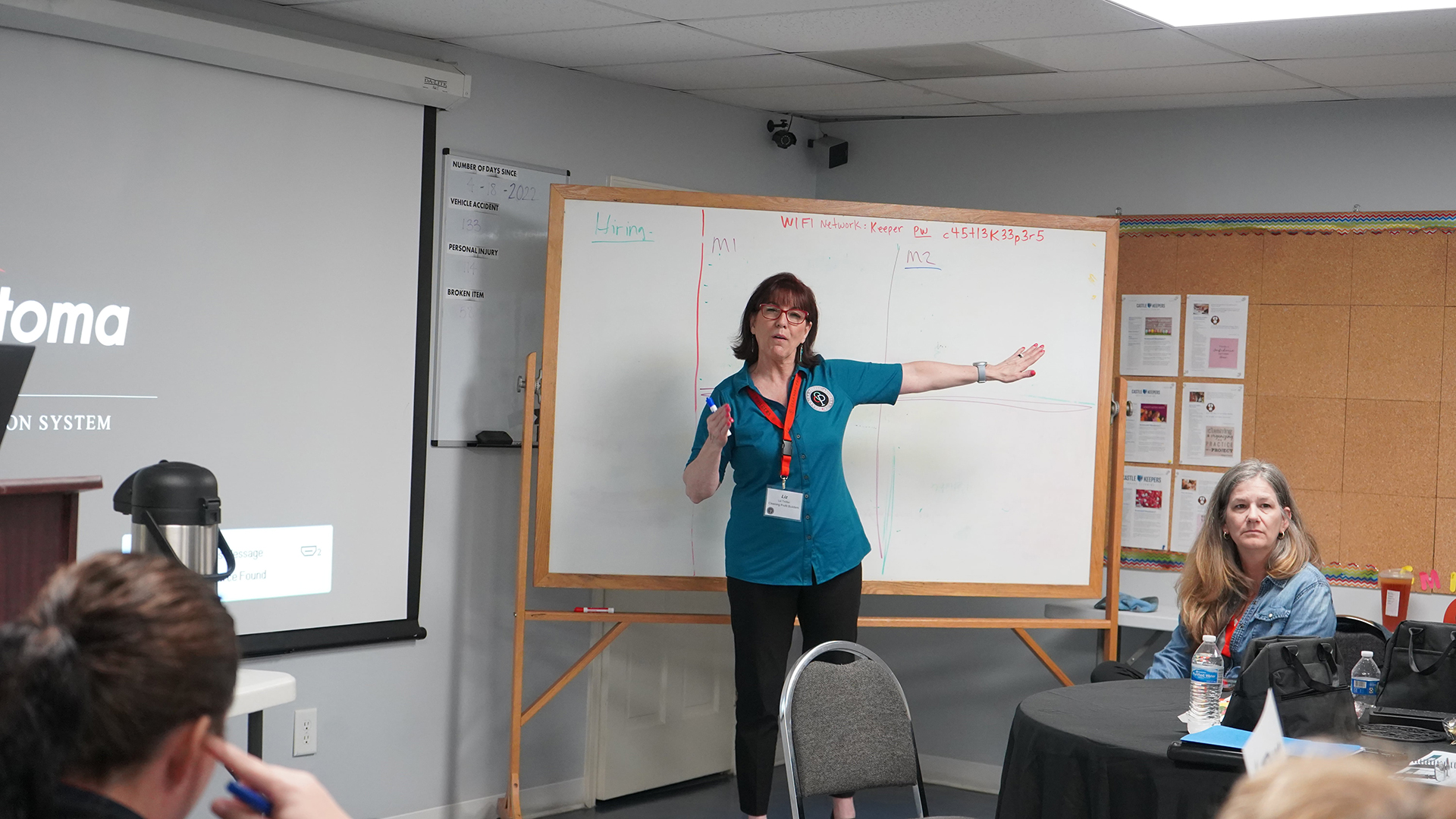
Data-driven leadership becomes natural when it is part of a weekly rhythm rather than something you do when things go wrong. Mastery Circle members track KPIs and weekly commitments in GET, the Growth Execution Tool, and bring those numbers to a weekly goal check-in with Liz Trotter and other owners. When your managers are responsible for results, Build Circle adds KPI management to their development. Use your scores to identify gaps, then choose priorities based on your goals and what needs to happen first. For broader reading on leadership and decision making, Harvard Business Review is a reliable source.
Key takeaways
- Start with the decisions you make, then choose the data that informs them.
- A one-page weekly scorecard beats a pile of reports.
- Numbers make people conversations clearer and fairer when you lead with curiosity.
- Let trends, not single weeks, shape your quarterly priorities.
- Pair the data with what your team and clients tell you.
Next step: write down your five most common decisions this week and the numbers that would make each one clearer.

Frequently asked questions
What is data-driven leadership for a cleaning company?
It means using a small set of numbers to guide decisions, people conversations and priorities, while still listening to your team and clients. The goal is clearer judgment, not more reports.
Which numbers should a cleaning company owner review every week?
Start with the numbers tied to your most common decisions. Many owners begin with revenue booked, labor percentage, leads and close rate, re-cleans and cancellations, each with a target and an owner.
How do I use data in employee conversations without it feeling like blame?
Share the number, then ask questions. Look for training gaps, scheduling problems or outside factors before drawing conclusions. Let the data open the conversation, not end it.
How do I avoid drowning in reports?
Keep a one-page scorecard. If a number never changes a decision, remove it. Add a new number only when you keep wishing you had it.
Develop the people leading your team
Learn Circle supports supervisors and managers with people and daily operations, Build Circle adds KPI management, and Leadership Circle develops senior leaders.
Not sure where to focus? Take the optional AOS Diagnostic.

Founder of Core Profit Builders and creator of the Align Operating System (AOS). Part owner in six cleaning companies. Certified High-Performance Coach (CHPC) and co-host of the Smart Business Moves podcast.
More about Liz